-->

July 12, 2015

Bubur Kacang Hijau (mung bean porridge)


It was the first breakfast food I tried in Indonesia. Not that it was my first breakfast.
I had awoken to find myself in an unfamiliar bed in an unfamiliar country the two previous mornings already. This was to be my third day with my host family in Yogyakarta and I woke up with an almost familiar feeling of unfamiliarityeverything around me sharp and overwhelming in its newness. Even the sounds of the morning were different here: the squawks of roosters right outside my window (which was actually a glass panel door that would open onto the patio, in theory, but was actually always locked); the personalized jingles of food vendors who rolled their carts through our neighborhood; the voices of neighbors talking outside, speaking in Bahasa Indonesia and Javanese, occasionally using a word that I recognized—or one that thought I did. On this morning I heard voices from inside, as well. Ibu, my host mom, and two new (even less familiar) voices were talking amicably in an elusive exchange of sounds and meanings.

I stepped out of my room and was greeted by an Australian-Indonesian husband and wife, good friends of my host parents, who were visiting from Down Under. They had gotten up early and walked to a nearby morning market. Small black plastic bags in their hands and on the counter suggested that it had been a successful trip. Ibu ushered me to the small, marble-top table in the kitchen. With the curiosity and bewilderment one might expect from an infant, I watched as plates were pulled from the drying rack next to the sink and unfamiliar foods unwrapped from their plastic veils. Of everything, Ibu thought the porridge would be the best, gentlest thing for me to try, and I happily agreed to try it. The wife, whose name I have now forgotten, expertly untied a plastic baggy ballooned with richly colored porridge—amber mixed with olive green, and subtle hues of dark purple—and poured it out into a bowl. I had never seen anything like it.

"That's probably too much," Ibu intervened with a second wide soup bowl and began to spoon out a smaller portion for me.
"Her stomach is still adjusting." And it was.

"With coconut milk?"

"Yes! Please."

The Australian man explained, speaking in English now with a comfortingly familiar accent, that his wife wanted to avoid the rich milk, so they had asked the vendor at the market to package everything individually. We sat down with our bowls around the kitchen table where their potpourri of market goodies was now on display.

During our arrival orientation in Jakarta, the week before, I had eaten crispy fried tempeh, spicy stir-fried green beans, whole fried fish, and stuffed tofu fritters. These had been my first tastes of Indonesia and they were mostly new and strange to my New England-cultivated taste buds. All of the sights, sounds, smells, schedules, and people surged through my faculties of perception, with me, overwhelmed, frantically trying to process and understand it all that was coming at me. Part of me just wanted to cozy up to a warm bowl of plain oatmeal with milk. Even the smallest recognizable thing could bring a lot of comfort in a wholly new and unfamiliar place.


There hadn't been any porridge at our arrival orientation, but here I was in my host family's kitchen with a breakfast not much different from the rolled oats we subsist on at home. The first spoonful was still very warm when it reached my mouth. It was creamy and rich, and sweet, but just subtly so. Perfect. I sampled bits of the other market foods, but I can't remember now what they were or even if I liked them. The porridge stayed with me. The sweet topaz stew and sangria grains of sticky rice were mysterious, and comforting. It was as if I was developing nostalgia for something I was trying for the first time.

Ibu told me what the porridge was called but my inexperienced tongue couldn't swallow the name. It spilled out of my mouth and floated away from my memory's grasp, lost somewhere among my foreign surroundings.

The couple invited me to join them on their next trip to the market before they left. Two days later, on the last morning of their visit, I woke up early to walk with them to a small outdoor market not far from our house. "Hati-hati, ya" Ibu called from the front door as we left. As we made our way along the edge of the road, I remember asking them what Ibu had meant. Hati-hati, after all, would translate to "hearts," wouldn't it?  No, no... they explained that it was close to "take care" or "be careful." Still feeling a bit puzzled, to myself I conceded that pickpocketing was an issue here and perhaps that was what Ibu wanted me to be careful about. (Later I would learn that "hati-hati" is used more commonly than one might use "be careful" in the U.S., applicable anytime someone departs.)
On our way to the market we passed a few people working in the flooded rice paddy down the block, and here and there vendors were preparing food and shop owners opening storefronts. The streets weren't busy yet, though; only the purr of the occasional motorcycle and the creak of passing becak predicted the bustling traffic that would soon crowd these streets.

The market was a modest neighborhood affair, but everything about it was exceptional to me. "Careful. Hati-hati," warned the kind Australian man pointing to the sloping metal roofs that I had barely missed with my forehead. The roof provided some shelter to the open-air marketplace, converging over the walkway that ran down the middle, but wasn't constructed for the unusually tall. Ducking down to keep my head intact, I started to notice my surroundings: bunches of leafy vegetables and towers of root spices, rows of packaged foods folded up in banana leaves and deep metal cauldrons whose escaping steam suggested hot (but indiscernible) contents.

As I looked around, I could see that people were looking at me. Their chatter was mainly indecipherable, but I could understand that I was attracting attention for more than just my height. I tried to smile at everyone who looked my way, but inside I just felt sheepish. All I could do was follow behind the couple and wait for their guidance. They led me to a woman seated behind three large pots and ordered something from her. Then I watched her swiftly prepare little bagged portions from each of the pots in succession. As she whipped the ladles from bag to bag, the sweet, milky smell of porridge wafted and recalled to memory the breakfast I had loved two days before.

The couple reminded me of the name of the porridge, but I wouldn't be able to recall the words later. And wouldn't try the dish again for many weeks.

I came to realize that breakfast foods aren't really a thing in Indonesiaat least not in the way I was used to. For the most part, my morning meals were similar to lunch and dinner, consisting mainly of rice topped with a stir-fry, fried tempeh and tofu, or soup. Bubur (porridge, oatmeal, gruel, or congee) is a meal for babies, the ill, or perhaps for a special treat on the weekend—not necessarily for breakfast.

Bubur kacang hijau is mung bean porridge, but isn't complete without a few necessary flourishes. It is usually served together with a black sticky rice pudding and topped with coconut milk. The ensemble is sweetened with the wonderfully rich-flavored palm sugar. Shavings from a deep red block of this Javanese sugar gives the porridge its amber glow. Pandan leaves are added while the beans boil, adding a subtle yet distinctive note of a leafy vanilla mixed with, perhaps, almond? A dash of salt and sometimes a gentle touch of ginger are the only other spices, leaving room in the bowl for the mellow earthiness of mung bean and the sweet and nutty black rice.

Sweets are perhaps the only food group in Indonesia not graced with a loving and fiery blend of spices and peppers—although even this exception warrants exceptions (like rujak es krim, a mixture of freshly diced tropical fruits topped with coconut milk ice cream and liberal drizzle of chili sauce—sweet, cold, and spicy!)

Many warung, small restaurants open to the street, sell bubur—mung bean, black rice, rice flour, savory congee and other varieties of porridge. Bubur kacang hijau, known colloquially as bubur kacang ijo and thus often shortened to burjo, can be harder to find. Once I knew the name, I told practically everyone who would listen how much I loved the porridge, perhaps hoping that the more times I said it the sooner I would find a chance to try it again. (Some people were flattered that I knew such a quintessentially Yogyakartan dish, most were amused.)

Eventually I would find burjo again. One morning at the small village home of my friend's host family I would help her host father boil mung beans and chop up a small mound of palm sugar, to make a simple and unassuming, but perfectly delicious rendition of the porridge.
Riding through the city one night with friends we would stop at a warung that specialized in burjo, offering it hot, or cold with crushed ice, late into the evening. My friend insisted that it was one of the best you could find in Yogyakarta; and, as if I'd already tried a hundred bowls myself, I wholeheartedly agreed.


November 1, 2013

You Can't Compare Apples and Rambutan...

Rambutan
Rambut means “hair” in Indonesian, giving a hint as to where this spunky little fruit got its name. With a thick outer peel covered in small rubbery hairs, a rambutan opens up to reveal a milky-translucent colored fruit hugging an almond shaped pit.
A bit like a grape both in taste and texture, the fruit can be really sweet, or a bit tart if plucked from the tree before their peak ripeness. While some varieties remain light green or yellow even after they have ripened, you can usually tell the fruit inside will be sweet when its exterior is bright pink or red. Another tell-tale sign of ripeness? A group of ants running gleefully through the rambutan hair forest. Once the fruit passes its peak ripeness, sugary juice begins to seep through the rind and the six-legged competition becomes fiercer.
The flesh of a rambutan can easily be peeled or eaten right off of the pit but a course papery skin on the pit (totally edible but a bit annoying) also comes free all too readily. It’s somewhat of a practiced art getting the fruit off of the pit by itself, while leaving the temperamental skin behind, untouched.

The rambutan season began around December. As the stands along the road selling fresh mangoes by the kilogram started to disappear, tables bearing red mountains of rambutan began to pop up in their place. At the average fruit stand you can buy a kilogram of the fruit, often sold still on the branches to preserve them, for 3,000 rupiah - the equivalent of about 30 cents USD. I have a few friends who have rambutan trees in front of their houses, thick bunches of the fruit hanging everywhere. A long bamboo pole with a hook fastened to the end is used harvest the fruit but you can also often find those hanging low enough to grab with bare hands.


Jambu (Guava) 
It’s about the size of an apple and looks a bit like a pear; it’s pale and often lightly browned and bruised because of the tenderness of its flesh. From the outside the guava is an incredibly unremarkable fruit.
But one soft bite into a guava reveals unremarkable it is not. 
It's all, POW! Hello, bright pink sweetness.

The skin is edible and often soft like a pear, though sometimes it will leave you with a bitter aftertaste. And many times the fruit itself packs a sour punch. That bright pink sweetness is the elusive ideal.
A seedy center makes up about 75% of the fruit, so it's pretty hard to avoid. Apparently it's totally fine to swallow the seeds, but they are just a little too big and I could never figure out how to coordinate that. So I would eat only about a quarter of the fruit before giving up on the rest.
With some sugar added and all the seeds strained away, guava juice (jus jambu) is probably the way to go. 


Manggis (Mangosteen)

In Bahasa Indonesia mangga is the name for mango, manggis is the name for mangosteen, semangka is watermelon, and kemangi is a basil-like herb - now if that's not a disaster just waiting to happen... (for me and all the other non-native Indonesian speakers who like to keep our mangosteens and our pesto separate.)

I didn't even know that this fruit existed until the end of my year in Indonesia. By that point I had made it my goal to try as many new fruits as my belly could bear before I left. I found this little guy at a small food stand that I biked past every day to and from school. The mangosteens were all shades of dark purple, and they radiated novelty in my foreign eyes. The woman behind the stand told me that mangosteen is a delicious fruit, and turning it over, she showed me how its bottom bears a clover design which reveals how many fruit segments you'll find inside. I was sold. 
I bought the fruit and raced home to symbolically add it to my fruit-eating résumé -- after snapping a few glamour shots on the patio.

The soft, fleshy peel of the mangosteen tears open easily to reveal small white segments of fruit. The proper way to open these is by using a paring knife, slicing across the center and then neatly popping the rind right off - clearly I didn't get the memo. I assumed everyone just tore into the rind with their thumbs until I was flipping through my album of photos with my host sister and she stopped me to ask what I had done to this poor mangosteen. Next time...

The fruit itself is delicious. Most segments contain a seed about the size of an almond. The flesh surrounding it is soft and juicy, and it melts easily off of the seed. Mangosteen has a bright, concentrated flavor, and it's almost like a fruity simple syrup in its unwavering sweetness. Smaller segments contain smaller seeds, and sometimes you'll find a baby segment nestled in between two big pieces without any seed at all.


Salak

If there ever were a fruit that could pull off leather jackets and look good on a fruit-sized Harley Davidson, this would be it. I challenge you to find a more badass food around. Its English name is snake fruit and I often mistook it for dragon fruit, but either way it definitely deserves a reptilian title. To harvest salak you walk down a narrow dirt path lined with small trees. Each one is made up of a cluster of thick stems that are covered in 
sharp thorns reaching out several inches in every direction. The trees' large fronds hang overhead, shading the path below. It's a carefully cultivated farm, and yet the field seems to wear the mask of a menacing jungle. Salak grows in bunches at the base of these trees so you squat (avoiding contact with the thorn laden ground) and, with a machete, begin to hack into the small branch bearing a good-sized bushel of fruit. It might take you a few strikes but eventually the fruits will come tumbling down. The fruits themselves still are covered with tiny needles that will spare none but the most calloused hands. The trick is to pick them up off the ground without actually touching them. This entails some sort of skilled maneuver using an untucked shirt, a glove, or a combination of bold, swift movements and yelps of pain.

After about 12 hours the thorns fall off and the scaly skin can be peeled off easily. But for the eager harvester who can't imagine waiting so long, breaking open the peel presents another dangerous challenge....

The fruit inside looks like large cloves of garlic. (Luckily the resemblance ends there.) It's sweet and slightly acidic, a bit like a honey crisp apple. Some varieties are crisp and juicy, while others are drier and almost crumbly. The crisp ones were my favorite, partly for the satisfying way each segment would pop of off its pit, leaving behind a smooth brown seed that looks remarkably like a chestnut. Another strange resemblance? When you first open a salak the white fruit inside is covered in a thin opaque inner layer of skin like the finicky membrane inside the shell of a hardboiled egg. It is edible, though, so you can take the time to rub the skin off with your thumb, or you can leave it as and try to forget everything I said about egg membranes as you pop the sweet lobe of fruit into your mouth. 


March 5, 2013

Traveling Food

A young man poses with his colorfully decorated cart carrying Pempek, a dish made from ground fish
and tapioca flour, and served with sweet or spicy sauces. The cart reads "Rp 1000" meaning one serving
costs just over $0.10 USD.
An essential part of Indonesian cuisine is the rich and lively culture of street food. In Yogyakarta travelling food carts serve meals, snacks and cold drinks throughout neighborhoods and work their way down the busy streets alongside the crowds of motorcycles, city buses, traditional pedicabs and horse drawn carriages that the traffic in Yogyakarta comprises. In the afternoon the streets are often bustling with vendors - on my way home from school I bike past carts selling mie ayam, noodles in broth with marinated chicken and mustard greens; gorengan, a name referring to any kind of battered or fried snack; and rujak es krim, a potpourri of diced tropical fruits topped with Indonesian style ice cream - closer to the consistency of sorbet but made from milk- and a bit of hot chili pepper sauce on top. When they are not travelling down the streets these food vendors will often park their carts on the edge of the road, in the parking lots of office buildings, in front of schools - anywhere there is room and the promise of customers - and serve out their food to people who stop by.

The food carts here come in every shape and size. There are traditional hand pushed wooden carts named kaki lima, or “five feet,” referring to the sum of the two wheels, single back stand, and two feet of the man pushing it; larger bicycle carts with the seat and pedals positioned behind the cart; and carts that are comprised of a large crate fitted to the back seat of a motorcycle. Those carts selling traditional cuisine are juxtaposed with more modern carts selling commercial products, like ice cream bars or pasteurized milk, with logo-plastered frames and recorded jingles broadcasting from their electronic megaphones.


It's not uncommon for vendors to leave their carts unattended in busy areas while they take
a break or go to a nearby mosque or masjid to pray.


But the modern carts selling commercial products and the more traditional vendors alike each have their own unique sound to broadcast what they are selling.
The squeaky horn of the cart selling fresh slices of fruit; the bakso meatball vendor clinking his spoon against a ceramic bowl; or the tapping of wooden blocks that announces the arrival of siomay, a dish of steamed vegetables and fish drenched in a spicy peanut sauce. Once you’ve learned the different sounds you always know what the vendor making his way down your street is selling.

Each morning as I’m dragging myself out of bed and preparing for school I hear the cart selling Sari Roti, a brand of processed white breads, singing down the street and know that I have about half an hour to finish getting ready before I’m late. Without fault, the white cart with its catchy tune and packages of commercially wrapped breads passes down my street every morning at 6-o’clock. The theme song plays from speakers on a short prerecorded loop, growing louder and clearer as the young man behind the cart rounds the corner and pedals past my house, and then slowly fades off into the distance. I’ve found that vendors often have a routine parking place or scheduled route that they stick to each day – I often pass the same food carts settling down at the same places along my route to school, and the vendors that pass down my street in the late afternoons have become familiar, each with their own unique songs and predictable timing. 

Many vendors sell hot dishes made to order; the prepared ingredients stacked high against the windowpane of the cart – cooked noodles and pre-chopped mustard greens for bakso, chicken breast and fried tofu for soto – and are assembled individually for each customer.


While on my food-cart quest capturing photos for this article I stumbled upon a man standing alone on the side of a quiet street with his cart selling a popular Indonesian soup called soto ayam. He had just served warm bowls of the soup to a group of people in a house nearby, so he was waiting with his cart not far down the street so that he could collect his dishes when they had finished. Feeling hungry I stopped and asked for a bowl of the soup with the noodles and without the rice and then found a seat on a long wooden bench that just happened to be nearby to wait. Pulling a bowl out from the bottom drawer of the cart the man added a handful of noodles, bean sprouts, and then shredded cabbage before drowning it all with a heaping ladle of broth from the large metal pot that sat on a small coal fire inside the cart. From the top shelf of the cart he took a piece fried tofu and a chicken breast, and he sliced the tofu and shredded some of the chicken meat directly into the bowl of soup. A few fried onions and just a pinch of chopped celery was added for the finishing touch, and then he brought the warm soup over to where I sat along with small dish of chili sauce and a bottle of a sweet soy sauce, somewhat confusingly for the native English-speaker called kecap (pronounced like ketchup), to be added as I liked.


The vendor left and then returned carrying a tray of bowls and condiments used by the previous customers. As I ate he washed the dishes in a small bucket of water behind his cart, preparing them for the next customers. It was a quiet morning, the street empty, and in that time no one else arrived eager to buy soto. The vendor and I talked briefly, I told him that I was from the U.S. but lived around the block with a host family and I asked if he too lived in the area – he didn’t, leaving me to wonder how far he journeyed each day walking down the streets of Yogyakarta with his soto cart.
I finished and returned my bowl, thanking the vendor and as I headed off on my way he started down the road in the opposite direction, continuing along his route in search of his next customers.

January 13, 2013

Terong Balado


With school six days a week – though it’s only a half-day on Saturdays – Sundays are the one day that we have entirely free in Yogyakarta, Indonesia.  During the week my host aunt, a chef who has her own catering service, brings homemade dishes in the afternoons that we heat up again for dinner and then, if there are leftovers, again for breakfast the next morning. Cooked foods sit in the center of the kitchen table underneath a large basket-like cover that keeps the bugs out and then at mealtimes we serve ourselves rice from the rice cooker on the counter - always the central part of the meal - and top it with the dishes on the table as we sit down to eat. We often fry tofu or tempeh, or steam vegetables and set them out on a plate to go along with the other dishes; and if there aren’t enough leftovers from the night before we might make a fried egg with vegetables for breakfast. But on Sundays my host sisters make the main dishes for the day.


At 5:30am last Sunday morning Mbak Ayu, my oldest host sister, poked her head into my bedroom to wake me up to get ready to head to the morning pasar, or traditional outdoor market, to buy ingredients for cooking that morning.  I groggily pulled myself out of bed, the promise of bubur kacang hijau, a sweet mung bean porridge that you can often find at the market, the only thing keeping me from laying my head back down on the soft pillow and falling back asleep for a few more hours.

The market is within walking distance of our house so we set out on foot, me trying to contain my yawns. I always have trouble getting up early but the mornings really are a wonderful time to be outside; while the air is still cool and fresh, before the roads become crowded with traffic and the air becomes hot and polluted. The colors, the sounds, the sweet smells of cooking foods - everything is so vibrant and beautiful in the morning. We passed a man sitting beside a heap of green coconuts as he scooped white flesh from the shells; warm aromas wafted from storefronts selling gorengan, assorted fried snacks like battered tempeh, and cassava fritters filled with palm sugar; and pedicab drivers slowly biked past on their morning routes. 
We turned down a long narrow street off of the main road we walked past fields of rice and grasses, brilliant shades of green glowing in the warm sunlight. The street was dotted with trees bearing every type of tropical fruit imaginable - massive spiky jackfruit tugging down on their flexible branches, bunches of bright pink rambutan with their soft spiky hair, and dark maroon cacao pods hanging nobly from their high branches.


November 27, 2012

Celebrating Eid al-Ahda in Indonesia


Two boys lay out their prayer mats before the morning prayers on Idul Adha.

At the end of October I experienced an Indonesian celebration of Idul Adha, a Muslim holiday also widely known as Eid al-Adha. The holiday coincides with the ending of the annual hajj, or Muslim pilgrimage, to Mecca. The hajj, one of the five pillars of Islam, is a remarkable international journey that units millions of Muslims each year in the holy city of Mecca. As my host mom explained to me, during the celebration of Idul Adha Muslims around the world pray for those finishing their difficult pilgrimage.
Idul Adha commemorates the prophet Ibrahim’s willingness to sacrifice his own son in submission to God. Livestock are sacrificed symbolically in a ceremony called qurban and the meat is shared among family and friends, and with the poor. On the day before the festival of sacrifice many Muslims fast from sunrise until sunset. 
I was eager to learn more about the holiday, and I really wanted to participate with my host family. I had never fasted before, so with curiosity and a blind resolve I decided I would take part in the day-long fast before Idul Adha. 

We woke up at 3:30am for sahur, the predawn meal preceding the first prayer of the day at 4am. We filled our bowls with steaming white rice and a soup of vegetables and traditional Indonesian meatballs. I helped myself to seconds and gulped down as much water as I could stomach while my host sister explained that it was common to overcompensate with food and drink as a first-timer. I was determined to fulfill my fast, but I was nervous about how I would fare when the sun came out. Twelve hours was a long time. As we ate together my sisters joked that it was like our “mission impossible” and as time quickly ticked by I was propelled into the fast with a sense of solidarity with my sisters and host parents. While my family left for prayer I tucked myself back in bed and slept until my second alarm went off - this time I had to get ready for school.

There were moments when I was tempted to break my fast. A teacher, unaware of my commitment,
gifted me with a soft bread roll filled with chocolate and for a moment I imagined pulling open the plastic wrapper with a pop! and taking a bite of the fluffy bread. But I slipped the package into my backpack and didn't dwell on it. Hours later, I biked past food carts and restaurants on my route home from school, and my salivary glands were seduced by the delicious aromas wafting into the street. But I pedaled on. At home the sight of the water cooler in the kitchen teased my parched, desperate throat, and it was a challenge not to give in. But I remembered the advice one teacher had given me when she found out I was fasting: "it's good to take a nap in the afternoon, before you can break your fast." I settled into my bedroom where neither food nor water could tempt me, and I fell into a calm sleep - napping for an hour or so until my family members returned home.
In the end, I made it all the way until Maghrib, the second to last prayer of the day, and broke my fast with family. The first glass of water to reach my lips was deliciously satisfying. And my newfound appreciation for the drink lasted with each of the following drinks.
Even while my hunger and thirst had sharpened throughout the day, I felt incredibly lucky to know that there would be food on the table and clean water to drink when I got home – something that I had never really appreciated before. As I longed for food and drink in a way I never had before I began to recognize that I am very fortunate in ways that I normally take for granted. Because of the family I was born into I have grown up with an abundance of resources and opportunity and I have never had to worry about access to basic living necessities. Fasting for the day gave me the space to really consider what it might be like to feel the pain of hunger and not know when I might be able to eat next. Because, honestly, much of what kept me going that day was my vivid imagination of the meal we would enjoy that evening. And when we got there, circled around the table in the kitchen, the conversation as pleasant and various as the foods on our plates, I was wholeheartedly grateful. 

Male teachers and staff restrain the cow as it is slaughtered in the ceremony of Qurban.
(Photo courtesy of Pak Budi Yantoro, my entrepreneurship teacher.)

The celebrations began the next day, on Friday, and because Idul Adha is a public holiday in Indonesia we had the day off from school. In the morning I went with my family to the school just down the block from our house for the morning Idul Adha prayer. When we arrived the school courtyard was already beginning to fill up with families from all around our neighborhood. There were long mats laid out across the courtyard in rows and as the call to prayer sang out from loudspeakers people unfurled their prayer rugs side-by-side, and the women put on long white headscarves for prayer. I found a seat on the edge of the courtyard and sat down to watch the prayer ceremony. When it began, verses from the Qur’an rang across the courtyard and a sea of people knelt down and stood up, and raised their arms in a series of movements. Though I didn’t understand what was being said it was incredible to watch, and it was a fascinating glimpse into the religious traditions of my host family and community. After the prayer had finished the entire neighborhood flooded into the street and as we all headed back to our houses there was a sense of friendliness and community in the air.
Beginning after the morning prayer and continuing throughout the day, the qurban was performed in neighborhoods and mosques across the city and the meat divided among neighbors and friends, and those who could afford to purchase meat donated to families who couldn’t. My host father bought five goats to be slaughtered; we kept a few kilograms of the meat and gave a portion to our housekeeper, and the rest was given to those in need. My school also purchased animals to be slaughtered for Idul Adha, and the following day we had a qurban ceremony at school instead of having classes.
When I arrived at school on Saturday morning there were two cows and a goat tied to trees in the parking lot. While students mingled and set their bags down in their classrooms a crowd of people began to gather in the parking lot for the qurban. A group of teachers and staff along with the school principal, exclusively male, untied the cow from the tree and held on to it by the rope around its neck as it fought to get away. It took six or seven men to reign the cow in and tip it over onto its side, and it took all of their effort to hold down the animal and yank rope tightly around its legs as it struggled desperately to break free. As they prepared to slaughter the cow, verses from the Qur’an rang out from a microphone and the students gathered around were encouraged to join in, in prayer. The animal was writhing on the ground, and it seemed to have lost control of its bowels. Feces littered the ground beside the cow; its tail was tucked tightly in between its legs and the dung had smeared across its hindquarters. The men held the cow down and grasped tightly to the ropes binding its legs together, and a large curved knife was used to cut into the cow’s neck. While it happened the cow was trembling and it tried to kick free of the ropes, and even as its head was very much separated from the neck, the cow tried to lift itself up off the ground. Then, after a moment or so, the fighting stopped and the cow became as still as the pool of dark blood that had collected behind it's severed neck.


Two girls in my class prepare the meat for our Javanese beef stew.
(Photo courtesy of Pak Budi Yantoro.)


When the qurban was finished one teacher cut open the cow's hide peeling it open like a paperbook, revealing meticulous illustrations of bovine anatomy. The meat was butchered on a tarp right in our school parking lot. Teachers prepared cuts of meat, and each class of students was given meat and a specific dish to cook. Even after every class got its share a lot of meat remained, and it was weighed out and packaged in plastic for donation to a charitable organization. All of the students spent the rest of the morning cooking around portable stoves in the open parking garage normally used for parking bicycles during the school day. My class was making a Javanese beef stew. We had a mat laid out in the parking lot where we prepared ingredients and took turns in front of the little stove; classes were cooking on mats all around the parking lot and as morning gave way to early afternoon the space filled with warm, spicy smells. When our beef stew was finished we packed up our things and carefully carried the hot stew up to our classroom on the second floor. We each had brought our own portion of plain white rice from home so once all of the dishes had been washed and the leftover ingredients packed away, we served ourselves the stew on top of our rice and enjoyed a delicious lunch together – the fruits of our labor – before heading home for the afternoon. Now, a month later, I’m reminded of our Idul Adha celebrations again as families across the U.S. gather together for Thanksgiving. As I see it, a shared spirit of community, appreciation, and generosity link these two distinct holidays - even when they're celebrated a month and thousands of miles apart.

August 30, 2012

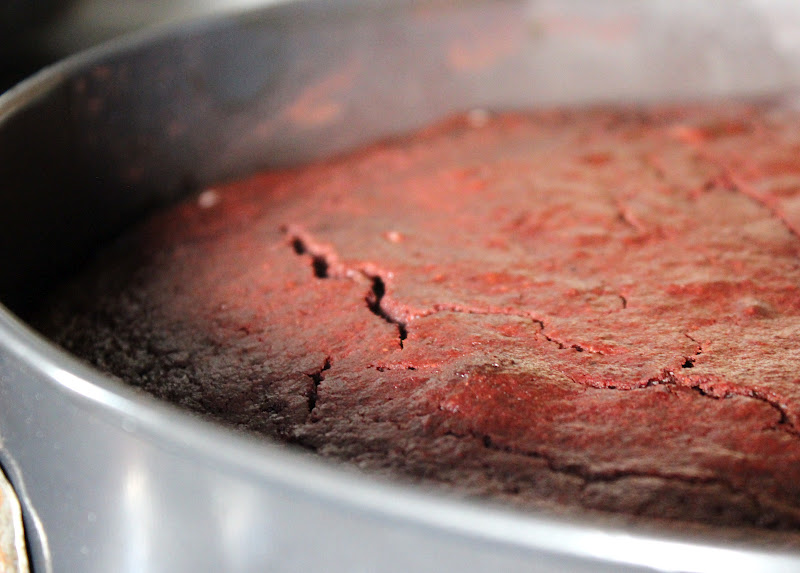
Chocolate Beet Cake


There are a lot of great things about having a CSA share. When you sign up for a weekly share you're supporting local farmers and sustainable farming; you get quality produce at a cheaper price than you could find in a grocery store; and each week you get to bring home delicious foods like seedy whole wheat breads, raw cheese, and sweet corn, that might not have found their way into your kitchen otherwise. For all the wonderful things that come with it, the one drawback of a CSA share is that you also can get stuck with produce that you really don't want. And then you have to find ways to use up all of the fresh fennel, or the eggplant, or the stalks of edamame that you signed up for.

For us, the greatest challenge has been finding ways to use the steady supply of red beets we've received this summer.


As a kid I had the shock of mistaking roasted beets for slices of my beloved canned cranberry sauce at a Thanksgiving dinner - that night some part of my subconscious was forever scarred by that alien root. But when they started popping up in our vegetable drawer this summer the trauma had faded from memory and I really had no aversion to trying them again. I topped a pizza with caramelized onions, walnuts, chèvre and small wedges of the roasted beet; we quickly decided that none of us liked the beets and had to pick every one of them off just to salvage our dinner. 

As beets continued to come in each week it became evident that the only way to swallow a beet was in very small portions smothered by other, better flavors. I enjoyed the same pizza with a sprinkling of grated beet and found that golden beets are nicely camoflauged inside of a muffin. So I hatched a plan to take down this weeks store in a chocolate (red beet) cake!


August 15, 2012

Marinated Tempeh Burgers

In just a few weeks I will be leaving for Indonesia. I am unbelievably excited, and nervous too. Just a couple of days ago I found out that I have a host family in Yogyakarta (pronounced jōg-jə-kär-tə, and sometimes shortened to Jogja) making me all the more excited. I feel nostalgic, too, for something I haven't even left yet; I haven't even left and I'm already beginning to feel the weight of how much I'll miss everyone. 

With just a few more weeks in the states, it seems like I should be doing crazy things - but really, things have been pretty normal. Though I've been trying to learn some Bahasa Indonesia and I have just recently started to contemplate how one goes about packing for a year abroad, for the most part things are the same as usual.

I stumbled upon this recipe a little while ago when we were in the middle of a hot spell - the perfect time to have burgers (so maybe it wasn't the best time to be turning on the oven, but it was definitely worth it). Incidentally, these delicious vegetarian burgers combine a traditional food made in Indonesia - tempeh - with something as quintessentially American as a good ol' burger. 
Now, how cool is that?

And it couldn't be a better combination. The tempeh is delicious marinated, it's moist, and it doesn't crumble apart like many homemade veggie burgers do.
I think they are best covered in melted cheddar, with crisp boston lettuce, ripe tomato, and maybe some avocado, too, next time. But however you like your burger - with mayonnaise or mustard, ketchup or sauerkraut, peanut butter or strawberry rhubarb jam - there's no denying these tempeh burgers are good.

July 27, 2012

Zucchini Bread

Our weekly CSA share fills our fridge with root vegetables, summer squash, berries, and deliciously fresh eggs. The wide variety of produce we get creates a weekly challenge of sorts: how to use all of this food. It has inspired great pizza, a batch of golden beet muffins, crêpes made with the eggs and pastry flour from our share, carrot pancakes, and vegetable salads of every shape and size.
When our share delivered a bounty of zucchini my sister took to making zucchini pasta for lunch - peeling off thin strips of zucchini and topping it with a drizzle of olive oil and some nutritional yeast. She only used the outer layer of the zucchini for the pasta, so before long the leftover zucchinis began to pile up in our vegetable drawer.


With a bag filled with naked zucchinis sitting neglected in the fridge, it seemed like a good time to make zucchini bread. It worked out well because I had been sitting on my hands, just waiting to make a batch of zucchini bread since the spring.
Rewind three months to the night my sister returned from the co-op with a small loaf of zucchini bread made by a local gluten-free bakery. It was deliciously moist, not too sweet, and was made with buckwheat - among other gluten-free flours - giving the loaf a pronounced earthy, slightly bitter, nutty flavor. The buckwheat worked well in the zucchini bread - it blanketed the other flavors without strangling them, giving it a level of sophistication and complexity that set it apart from other zucchini breads and made it truly irresistible. The loaf disappeared far too quickly, leaving me with nothing to do but dream of making a zucchini bread that could fill its place.
So, without further ado: a vegan, gluten-free (provided your oats are confirmed gluten-free) zucchini bread that is rich in flavor and texture, and has just enough buckwheat flour to remind you that this is not your grandmother's zucchini bread.
Unless she makes her's with buckwheat flour too - in that case, hats off to her!


July 16, 2012

Raspberry Rhubarb Crisp


There is a small restaurant in our town that makes delicious, hearty meals. The buffet steams with Indian curries and vegetable stews, wild rice casseroles layered with melted cheese and warm slices of baked sweet potato clinging to their toasted skins. Once you've filled your plate with a colorful array of foods you reach the counter, and as you hand the waitress your plate to be weighed, you'll notice all of the beautiful baked goods. Thumbprints filled with raspberry jam, a chocolate bundt cake dusted with powdered sugar, and apricot muffins with grandiose tops.

There is often one giant crisp filled with seasonal fresh fruits sitting on the counter. When you decide to try some, they'll fill a wide soup cup to the brim and heat it in the microwave. Once it's warm a waiter will bring it over to your table and you'll dive in with a spoon, scooping out a warm mouthful of berries with a sprinkling of oats. The berries are tart and sweet, and so velvety they will seem to just melt away in your mouth.... Suddenly you'll realize how little you have left and you'll try to savor the last few bites. When you reach the bottom you'll fervently scrape the last traces of filling from the dish, licking the spoon clean. And when you've finished you'll ask yourself why you don't eat crisps more often.


June 20, 2012

Strawberry Basil Scones

On warm summer days like today, it's hard to find something more refreshing than a handful of ripe berries, still cool from the fridge. It seems silly to add them to a dish or bake with them when berries are just so perfect by themselves. I would have happily rinsed off the strawberries and eaten them straight from the open box, but my dad had been nudging me to make these strawberry basil scones for months. And each time he did, my reply was "they're not in season yet...." The bland strawberries you find in the winter really just aren't the same.


But now it's nearly July and our local co-op is brimming with fresh produce. There are cartons of brilliantly red strawberries and bunches of fresh basil. So on my first day of summer break I hopped on my bike and pedaled over to the co-op where I bought a box heaping with small, ripe strawberries; a pound of butter; a small bunch of basil; and a pint of half-and-half - everything I would need for these strawberry scones.


May 4, 2012

Pumpkin Bread

Last week I accepted a full scholarship to study abroad and live with a host family in Indonesia next year. I also made this pumpkin bread. The scholarship is through YES Abroad, a student exchange program funded by the State Department. The bread is a sweet, spiced pumpkin quick bread that warmed our rainy afternoon. 
The Kennedy-Lugar Youth Exchange and Study (YES) Program was founded in the aftermath of 9/11 as a way to build connections and understanding between the U.S. and countries around the world, particularly those with significant Muslim populations. In the 2003-2004 academic year the first YES exchange students came to the U.S. from Egypt, Gaza, Indonesia, Jordan, Kuwait, Lebanon, Malaysia, Nigeria, Pakistan, Syria, Tunisia, Turkey, West Bank, and Yemen. Since then, the program has expanded to accept students from 39 different countries for the 2011-2012 academic year. Up until 2007 the YES Program brought high school students from countries around the world to study and live with host families in the U.S., but wasn't sending students from the U.S. to other countries.


When the YES Abroad Program was established in 2007 to send American high school students to selected YES countries it furthered the potential and impact of the program and fostered greater trust between the countries involved in the YES program. Next year 55 American students will be hosted in nine different countries, each with significant Muslim populations: Bosnia & Herzegovina, Ghana, India, Indonesia, Malaysia, Morocco, Oman, Thailand, and Turkey.


April 22, 2012

Banana Waffles

Little flowers have sprung up between blades of grass in every lawn, and the first bundles of asparagus and cartons of berries have appeared in the produce section. The silence of winter is gone, broken by the familiar sounds that had faded from memory: the chirps and tweets of birds rising with the sun in the morning; the low blasts of a horn as the ferry begins to depart from the dock down by the waterfront; the delicate tapping of raindrops on the window pane as a rain cloud passes overhead; and the chiming of church bells brightly declaring that it is 7pm while the sun is still up.


The arrival of these signs of spring is enlivening, and a comfort. Like curling up with a cup of tea and a fascinating book. Or realizing that you have no idea where you will be a year from now, but that you are okay with that - excited even. Or waking up early and deciding that you have nothing better to do than mix up a batch of waffles. The aura of spring fills the air like pollen - but in a much nicer way - and things just seem a little bit easier.

April 8, 2012

Pizza


I washed up on the shores of the weekend wanting nothing more than to spend some quality time with an old friend, the kitchen. After weeks without so much as a simple cookie or even a small batch of pancakes it was time to reconcile our relationship, the kitchen and I, and bake. I leafed through my notebook of recipes and then pulled a few of my favorite cookbooks off of the shelf, finally settling with a book about bread by Laurel Robertson. After my unintended hiatus I wanted to make something that would take some time. Spend an afternoon kneading dough, mixing ingredients, and walking around in a cloud of flour.


I stumbled upon a recipe for Sicilian pizza and was reminded of the pizza we ate in Italy. Thick square slices with chewy dough; bright, flavorful sauce; and delicious cheeses. In Italy a pizzeria or a street cart selling slices was never more than twenty steps away, so the thick slices soon became a familiar afternoon snack.


March 11, 2012

Granola Bars


Last week I was staying in a small, one-room cabana on the beach in Tulum, Mexico. Sand surrounded the cabana so a short path had been dug out to the door. Inside, everything was a warm shade of white: the walls, the wooden bed frame, the sheets and pillowcases, even the mosquito net draped over the bed. A bright green blanket was the only exception.


Each night I fell asleep to the sound of waves crashing on the beach and wind rustling through the palm trees. By morning a pile of sand had collected on the floor, swept under the door by the wind, and I woke up to the chirping of birds and sun pouring in through the window.
Some mornings I ran on the beach. Running barefoot in the wet sand as cool waves licked my feet. Other days I woke up and read on the beach as the sun rose in the sky. When our stomachs began to grumble for breakfast my family walked a little ways down the beach to a rustic Italian restaurant where the menu was painted on to a small board of wood. There were seven options and by the end of the week I had ordered each one: the giant pancakes, sliced and stacked into a tower; the egg in a hole, made with fresh eggs and their homemade bread; the toast, served in a hand carved wooden dish with nutella and jam.